WELCOME
to EDD, the world's first software that measures
what really motivates founding teams.
Free of charge & non-binding
WELCOME
to EDD, the world's first software that measureswhat really motivates founding teams (
).
Free of charge & non-binding






























































BEHIND THE SCENES OF "
"
The goal was never to develop a tool
to make money, but rather to digitize the knowledge of three
investors from Salzburg for their colleagues
and make it available free of charge
so that they could operate effectively, efficiently, and in a value-creating manner
.
Based in Salzburg, BWS Invest has been consistently investing in one of the scarcest commodities in the venture environment since 2014: the entrepreneurial quality of people and teams. As active entrepreneurs and investors, they have taken a clear stance from the outset: they do not primarily invest in ideas, pitch decks, or business plans, but in people, their motives, their decision-making logic, and their teamwork.
A total of 42 early-stage investments have been made to date, of which 12 companies are currently active in the portfolio. However, in addition to a few successful exits, 21 investments had to be written off as failures. This rate is neither unusual nor embarrassing by international standards—it is, in fact, realistic. Nevertheless, an uncomfortable but crucial question arose internally: What was the real reason for this? And above all: Could it have been predicted earlier?
The retrospective analysis revealed a clear pattern. In the vast majority of cases, the projects did not fail because of the idea, the market, or a lack of capital. Human factors were decisive: unspoken conflicts of interest within the founding team, differing risk appetites, a lack of clarity regarding roles, incompatible values, or simply a lack of resilience in critical phases. These are factors that are either not assessed at all or only intuitively in classic due diligence processes.
This is precisely where Vero Neubacher, Dr. Walter Antosch, and Thomas Stranig began their joint work. Drawing on their experience in entrepreneurship, brand and personality diagnostics, and scientific psychology, they asked a fundamental question: Why do investors still accept a blind risk with teams that they would never tolerate with numbers?
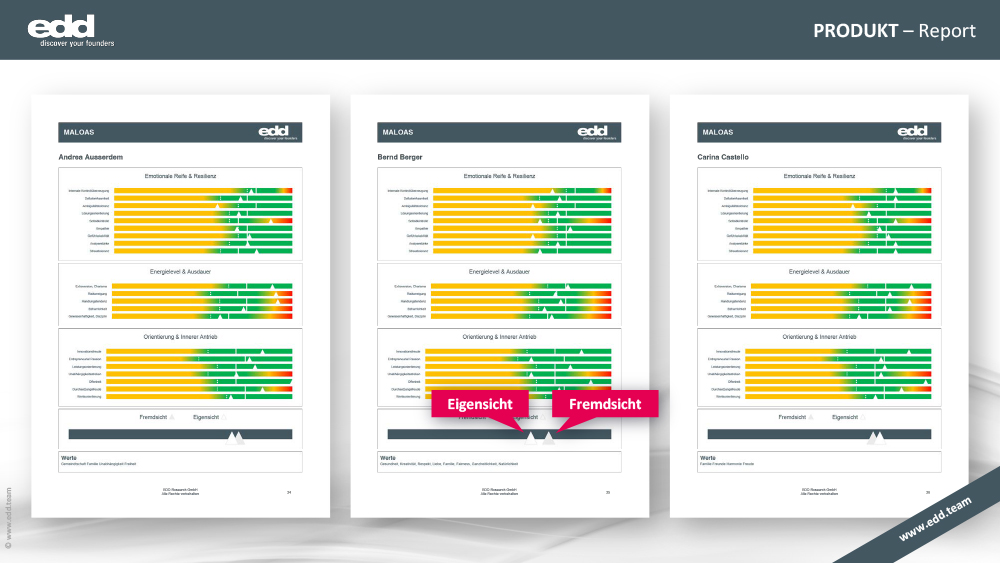
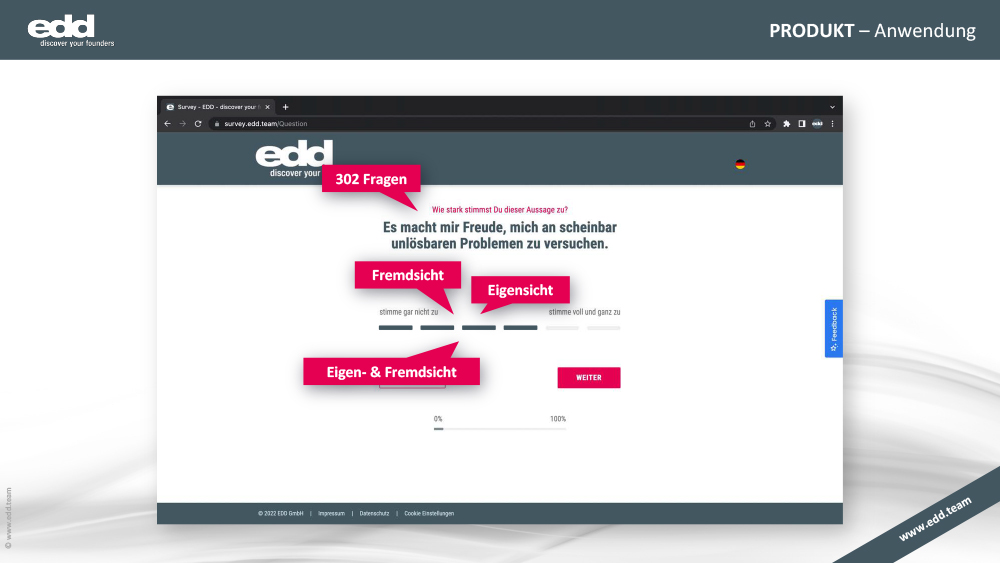
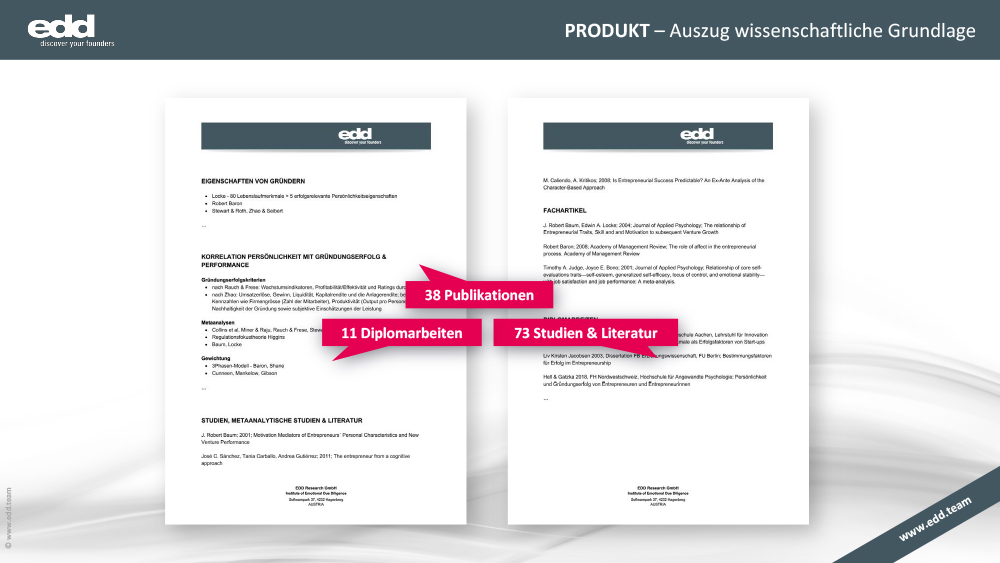
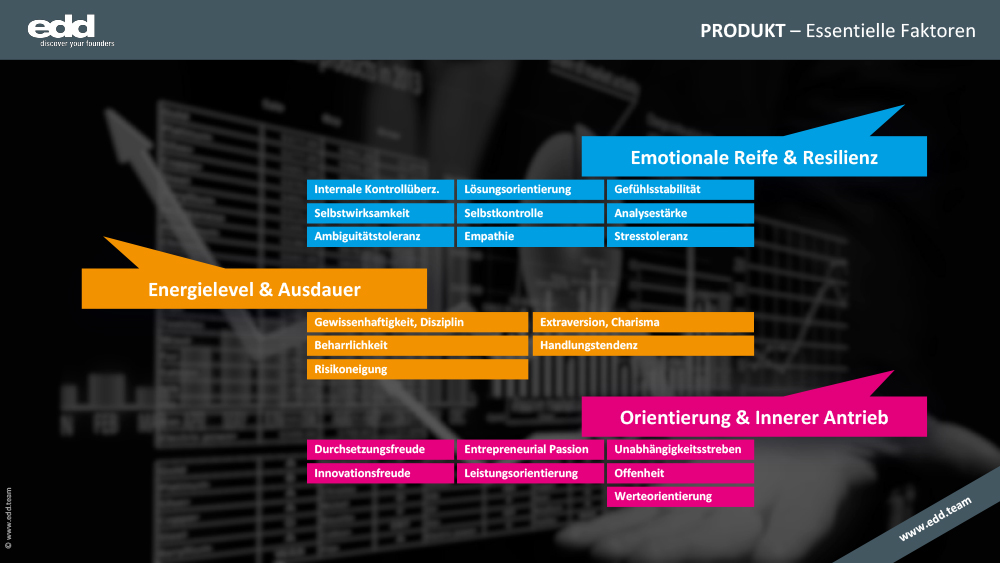
This question led to the creation of EDD —the world's first scientifically based, data-driven software for team due diligence. The goal was not to evaluate or label people, but to identify risks before they become costly. EDD analyzes founding and management teams along clearly defined, validated dimensions such as decision-making style, motivational structure, conflict dynamics, resilience, and team fit.
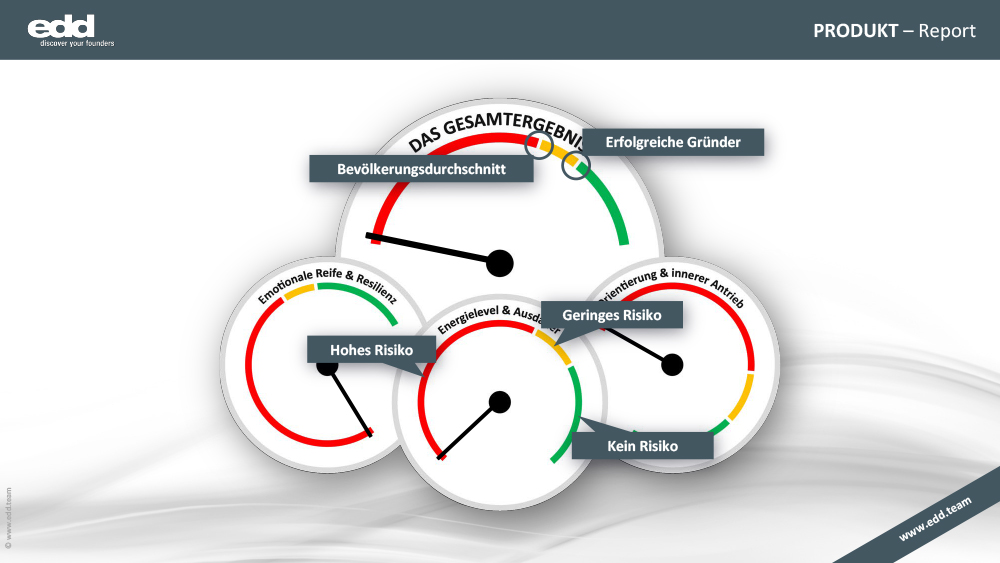
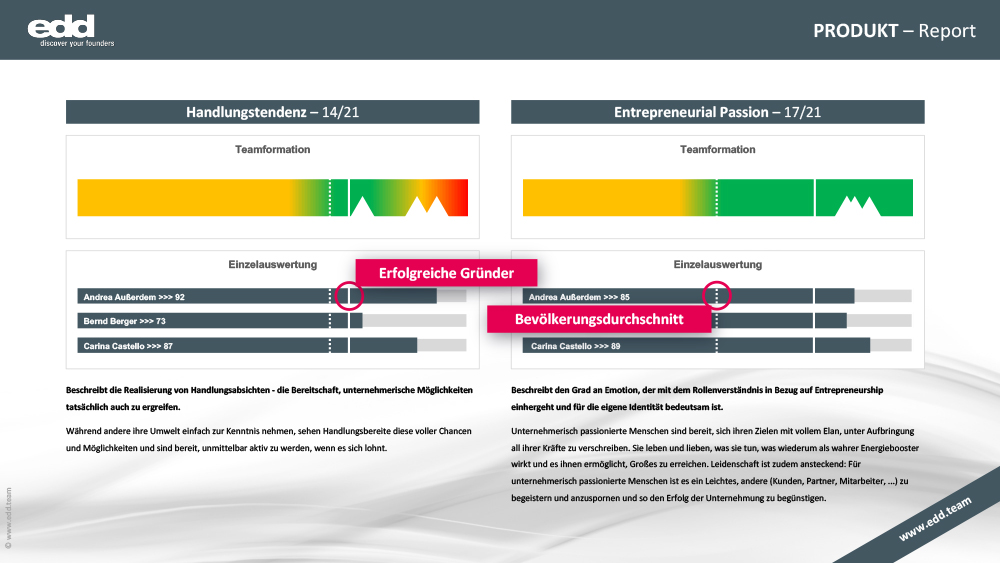
For investors, this represents a paradigm shift: No longer gut feeling versus numbers, but hard facts plus reliable team data. EDD does not provide yes/no answers, but rather transparency: Where are strengths? Where are latent areas of conflict? What risks are investable – and which are not? This will team quality for the first time comparable, scalable, and professionally integrable into existing investment and due diligence processes.
The consequence is clear: in a market where capital is increasingly interchangeable, team quality becomes the decisive differentiating factor. Investors who continue to focus exclusively on market size, product, and financial metrics accept a structural risk that could be avoided. On the other hand, those who systematically understand who they are investing with not only increase the probability of success for individual investments, but also the resilience of the entire portfolio.
EDD is therefore not a tool for special cases, but a necessary addition to modern investment decisions. Because one thing is very clear from BWS Invest's experience: "Without a genuine understanding of the people in the company, it's no longer possible."
BEHIND THE SCENES OF "
"
The goal was never to develop a tool to make money, but rather to digitize the knowledge of three Salzburg-based investors for their colleagues and make it available free of charge so that they could operate effectively, efficiently, and in a value-creating manner.
Based in Salzburg, BWS Invest has been consistently investing in one of the scarcest commodities in the venture environment since 2014: the entrepreneurial quality of people and teams. As active entrepreneurs and investors, they have taken a clear stance from the outset: they do not primarily invest in ideas, pitch decks, or business plans, but in people, their motives, their decision-making logic, and their teamwork.
A total of 42 early-stage investments have been made to date, of which 12 companies are currently active in the portfolio. However, in addition to a few successful exits, 21 investments had to be written off as failures. This rate is neither unusual nor embarrassing by international standards—it is, in fact, realistic. Nevertheless, an uncomfortable but crucial question arose internally: What was the real reason for this? And above all: Could it have been predicted earlier?
The retrospective analysis revealed a clear pattern. In the vast majority of cases, the projects did not fail because of the idea, the market, or a lack of capital. Human factors were decisive: unspoken conflicts of interest within the founding team, differing risk appetites, a lack of clarity regarding roles, incompatible values, or simply a lack of resilience in critical phases. These are factors that are either not assessed at all or only intuitively in classic due diligence processes.
This is precisely where Vero Neubacher, Dr. Walter Antosch, and Thomas Stranig began their joint work. Drawing on their experience in entrepreneurship, brand and personality diagnostics, and scientific psychology, they asked a fundamental question: Why do investors still accept a blind risk with teams that they would never tolerate with numbers?
This question led to the creation of EDD —the world's first scientifically based, data-driven software for team due diligence. The goal was not to evaluate or label people, but to identify risks before they become costly. EDD analyzes founding and management teams along clearly defined, validated dimensions such as decision-making style, motivational structure, conflict dynamics, resilience, and team fit.
For investors, this represents a paradigm shift: No longer gut feeling versus numbers, but hard facts plus reliable team data. EDD does not provide yes/no answers, but rather transparency: Where are strengths? Where are latent areas of conflict? What risks are investable – and which are not? This will team quality for the first time comparable, scalable, and professionally integrable into existing investment and due diligence processes.
The consequence is clear: in a market where capital is increasingly interchangeable, team quality becomes the decisive differentiating factor. Investors who continue to focus exclusively on market size, product, and financial metrics accept a structural risk that could be avoided. On the other hand, those who systematically understand who they are investing with not only increase the probability of success for individual investments, but also the resilience of the entire portfolio.
EDD is therefore not a tool for special cases, but a necessary addition to modern investment decisions. Because one thing is very clear from BWS Invest's experience: "Without a genuine understanding of the people in the company, it's no longer possible."
EDD Research, Inc.
Hafenstr. 47-51, 4020 Linz, Austria